
ON RIPENING, THE STRAWBERRY MOON AND HAVING THE COURAGE TO PAUSE
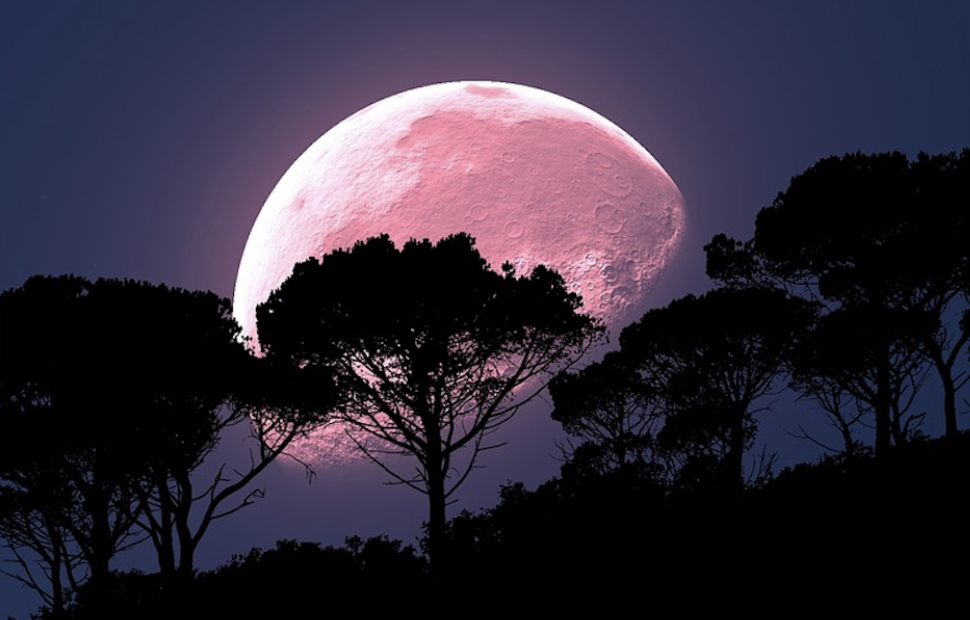
June's Full Moon is traditionally known as the Strawberry Moon, a name that reflects the brief, but cherished strawberry harvest season in many parts of North America. Although people sometimes imagine a rosy-colored moon rising in the sky, the name has less to do with the moon's appearance than with what is happening on the earth below. Strawberries are ripening. In fact, I think my strawberry harvest will be great this year - although because I eat them every time I walk by, I’ve lost count. My garden is beginning to offer evidence of months of care. Fields that seemed quiet just a few weeks ago are now revealing the fruits of a process that has been unfolding largely out of sight.
I have always appreciated the wisdom that can be found in seasonal cycles. Nature rarely rushes. A seed does not question whether it should be growing more quickly. A tree does not compare itself to the trees around it. The strawberry plant does not produce fruit throughout the year in an effort to prove its worthiness. Each living thing participates in a rhythm that includes periods of growth, periods of flowering, periods of harvest, and periods of rest. When we spend enough time paying attention, it becomes difficult to ignore the possibility that we, too, were meant to live in rhythms rather than in a state of constant productivity.
As I have been reflecting on this month's Full Moon, I have found myself returning to a question that surfaces periodically in my own life. What happens when busyness becomes more than a way of getting things done? What happens when productivity becomes a place we go to avoid something else?
This is not a question I ask from a place of judgment. In fact, it is a question that emerges from personal experience. I genuinely enjoy meaningful work. I enjoy helping philanthropists align their goals with their values, sharing health and wellness topics with leaders of nonprofit organizations, holding space for the Seeds of Wellness community, hosting book clubs, learning new things, and bringing ideas into the world. Much of what I do feels aligned with my values and connected to a sense of purpose. Because of that, it can sometimes be difficult to distinguish between engagement that nourishes me and busyness that simply keeps me occupied.
Over the years, I have learned that I am very good at being busy. And I suspect I am not alone.
Many of the women who find their way to Seeds of Wellness are deeply committed people. They are leaders, caregivers, nonprofit professionals, entrepreneurs, artists, advocates, educators, and community builders. They care deeply about the people they serve and the work they do. Their calendars are often filled with responsibilities that matter. Their days are spent responding to needs, solving problems, supporting others, and trying to make a positive contribution to the world around them.
The challenge is that when we’re good at carrying responsibility, we may not always recognize when responsibility begins to crowd out reflection. We may not notice when every available space in our schedule becomes occupied. We may not realize that we have become so accustomed to movement that stillness feels unfamiliar.
I have often wondered whether one of the reasons we remain busy is because busyness is socially rewarded. Few people question someone who is constantly occupied. Productivity is often celebrated as evidence of commitment, competence, and success. When we describe ourselves as overwhelmed, exhausted, or stretched thin, we frequently receive sympathy, admiration, or understanding. Very few people encourage us to do less. Even fewer encourage us to pause long enough to consider why we may feel compelled to do so much.
Yet beneath the surface of our activity, there is sometimes another story unfolding.
I have come to believe that overworking is not always about ambition. Sometimes it is about avoidance.
That statement may sound uncomfortable at first, particularly for those of us who pride ourselves on being responsible and dependable. Yet when I look honestly at my own life and listen carefully to the experiences of the women I work with, I see how easily busyness can become a refuge. It can offer distraction during seasons of uncertainty. It can provide structure when life feels unpredictable. It can create a sense of accomplishment when other areas of our lives feel messy, unresolved, or beyond our control.
In some cases, work allows us to postpone difficult conversations with ourselves. As long as there is another project to complete, another email to answer, another meeting to attend, or another obligation to fulfill, we can delay confronting emotions that feel more complicated to navigate.
Grief is one example. Many of us have experienced periods when staying busy felt easier than allowing ourselves to fully experience a loss. The loss may involve the death of a loved one, but it can also involve the ending of a relationship, a shift in identity, a health challenge, a disappointment, or a dream that didn’t unfold as we had hoped. Work provides something concrete to focus on. It gives us tasks to accomplish and goals to pursue. While these activities may be valuable in their own right, they can also create enough noise to drown out quieter emotions that are asking for our attention.
The same can be true of uncertainty. Most of us prefer answers to questions, clarity to ambiguity, and movement to waiting. Yet life rarely unfolds according to our preferred timeline. There are seasons when we don’t know what comes next, and there is often discomfort in that not knowing. During those times, busyness can become a way of convincing ourselves that we are making progress, even when the real work may involve patience, trust, or acceptance.
As I write this, I find myself thinking about the strawberry plants growing in my garden, Reed’s Garden (named after my grandfather.) Months before fruit appears, much of the plant's activity takes place below the surface. Roots strengthen. Nutrients are gathered. Conditions are assessed. Growth occurs even when there is little visible evidence that anything is happening.
Our culture doesn’t always honor this kind of growth.
We tend to celebrate visible achievements. We recognize milestones, accomplishments, promotions, publications, completed projects, and measurable outcomes. What often goes unnoticed are the quieter forms of growth that make those achievements possible. The courage required to heal. The discipline required to rest. The wisdom required to say no. The patience required to wait for clarity. The vulnerability required to acknowledge that we are tired.
Yet these forms of growth may be every bit as important as the accomplishments that receive public recognition.
Perhaps this is one of the gifts of the Full Moon. Traditionally associated with illumination, the Full Moon invites us to notice what has been hidden, overlooked, or left unexplored. It encourages us to step out of autopilot and become more conscious of the choices we’re making and the patterns we’re repeating.
Resources for Further Study
If the themes of the Strawberry Moon resonate with you, the following books and resources offer opportunities to deepen your understanding of seasonal living, mindfulness, rest, nature connection, and the wisdom of paying attention.
Books
Braiding Sweetgrass by Robin Wall Kimmerer
A beautiful exploration of reciprocity, gratitude, Indigenous wisdom, and our relationship with the natural world.
The Nature Fix by Florence Williams
An accessible look at the science behind the health benefits of spending time in nature.
Rest Is Resistance by Tricia Hersey
An invitation to reconsider our relationship with productivity, rest, and personal well-being.
Breath by James Nestor
A fascinating examination of how something as simple as breathing can influence physical and emotional health.
Wintering by Katherine May
A thoughtful reflection on the natural cycles of growth, retreat, challenge, and renewal that shape our lives.
Practices to Explore
Keep a seasonal journal and note changes you observe in yourself and in the natural world.
Visit a local farmers market and learn where your food comes from.
Spend ten minutes each day outside without a specific goal or agenda.
Practice mindful breathing while observing the moon throughout its monthly cycle.
Create a gratitude ritual that helps you acknowledge the sources of abundance in your life.
Learn More About the Strawberry Moon
The Strawberry Moon takes its name from Indigenous communities of the northeastern United States who associated this full moon with the brief strawberry harvest season. While the name is widely used today, it serves as a reminder that many seasonal traditions originated from close observation of the land and its rhythms. Taking time to learn about the Indigenous histories and ecological knowledge of the places where we live can deepen our connection to both community and the landscape around us.
Closing Thoughts
The Strawberry Moon arrives each year whether we’re paying attention or not. Yet when we pause to notice it, even briefly, it offers a gentle reminder that life unfolds in seasons. There are seasons of planting and striving, seasons of harvest and celebration, and seasons that call us to rest, reflect, and prepare for what comes next.
Many of us move through our days focused on what remains unfinished, what needs improvement, or what challenge lies ahead. The Strawberry Moon invites a different perspective. It encourages us to notice what is already ripening in our lives. It asks us to acknowledge the relationships, experiences, and small moments of beauty that nourish us along the way.
As you step into the weeks ahead, consider what is coming into fullness in your own life. What have you been cultivating with your time, energy, and attention? What is ready to be enjoyed, shared, celebrated, or released?
May this full moon offer an opportunity to slow down, savor the sweetness of the season, and remember that abundance is often found not in having more, but in fully appreciating what is already here.
And then, after perhaps a few heavier than most reflections… something sweet.
Strawberry Moon Strawberry Shortcake
The Strawberry Moon arrives at the height of strawberry season, making it the perfect time to enjoy a simple dessert that celebrates the sweetness and abundance of early summer. This recipe is intentionally uncomplicated, allowing the strawberries to remain the star of the show.
Ingredients
For the Strawberries
4 cups fresh strawberries, hulled and sliced
2–3 tablespoons maple syrup or honey (optional)
1 teaspoon vanilla extract
For the Shortcakes
2 cups all-purpose flour
1 tablespoon baking powder
2 tablespoons sugar
½ teaspoon sea salt
6 tablespoons cold butter, cut into small pieces
¾ cup milk or buttermilk
1 teaspoon vanilla extract
For the Topping
Fresh whipped cream or coconut whipped cream
Instructions
Place the sliced strawberries in a bowl. Add maple syrup or honey if desired and stir gently. Allow them to sit for at least 30 minutes so their juices begin to develop.
Preheat the oven to 425°F.
In a large bowl, whisk together the flour, baking powder, sugar, and salt. Cut in the butter until the mixture resembles coarse crumbs.
Stir together the milk and vanilla, then add to the dry ingredients. Mix just until combined.
Turn the dough onto a lightly floured surface and gently pat it into a one-inch-thick rectangle. Cut into six rounds or squares.
Place on a baking sheet and bake for 12–15 minutes, or until lightly golden.
Allow the shortcakes to cool slightly. Split them in half, spoon generous portions of strawberries over the bottom half, add whipped cream, and place the top half over the filling.