
DO WHAT YOU LOVE. LOVE WHAT YOU DO.
Reflections on devotion, purpose, and beginning again
The new moon arrives quietly.
Unlike the brilliance of the full moon, there is no spectacle. No dramatic illumination. Instead, there is darkness, soft, receptive, fertile. A space where seeds rest beneath the soil before they push toward light.
Nature does not rush beginnings. Roots are forming before shoots appear. Energy gathers before movement happens. Renewal often begins invisibly.
The new moon asks us to slow down long enough to notice what wants to emerge within us.
For many of us who carry responsibility, sometimes heavy responsibilities, for others - family, community, careers - the question of personal longing can feel really distant, even a dream. It’s so easy for life to become a series of obligations, expectations, and roles. Somewhere along the way, the simple question of joy gets lost. And yet the question remains essential:
What do I love?
Not what is impressive. Not what is productive. Not what is expected. But what feels alive.
For the past 30 years, one of my mantras has been “do what you love everyday” whether I get paid for it, whether it’s “productive” or not, whether anyone gives you credit or recognition. This has helped me stay grounded even when a path forward seemed unclear.
March, Women’s History Month, offers a powerful invitation to reconnect with purpose by reflecting on the lives of women who lived with extraordinary devotion to what mattered most to them.
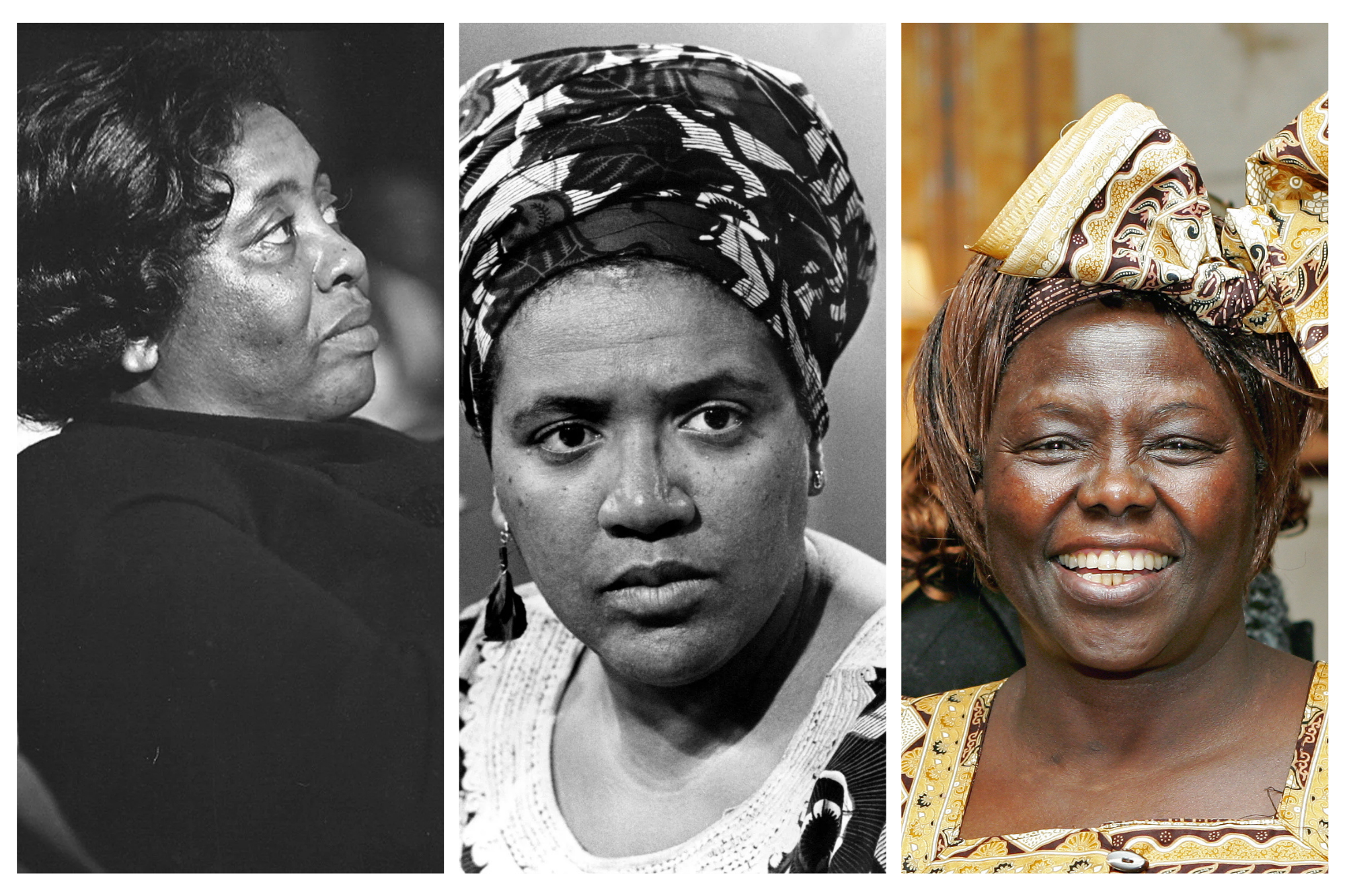
This month we draw inspiration from three remarkable leaders and my heroines:
Fannie Lou Hamer
Audre Lorde
Wangari Maathai
Each of them shows us that loving what we do is not about ease, it is about alignment.
Devotion as a Form of Love: Fannie Lou Hamer
Fannie Lou Hamer did not choose activism because it was comfortable. She chose it because she believed deeply in justice and human dignity.
Born into poverty in Mississippi, she endured systemic racism, violence, and oppression. After attempting to register to vote, she was fired from her job and later brutally beaten while in police custody. Yet she continued to organize, advocate, and speak publicly.
Her famous words “I’m sick and tired of being sick and tired” came from a place of clarity, not defeat.
Hamer loved her community. She loved the possibility of freedom for future generations. Her activism was rooted in devotion.
Her life teaches us that loving what we do is not always about pleasure. Sometimes it is about purpose. Love can be expressed as commitment.
Joy as Survival: Audre Lorde
Audre Lorde’s work reminds us that joy and creativity are not luxuries, they are necessities.
She wrote extensively about the “erotic” as a source of power, describing it as a deep well of feeling, satisfaction, and connection within the body. For Lorde, disconnection from joy weakened us. Connection to joy strengthened us.
This insight aligns with modern research on well-being. Activities that bring meaning and enjoyment stimulate neurotransmitters such as dopamine and oxytocin, which support motivation, bonding, and emotional resilience. (Salamone, J. D., & Correa, M., The mysterious motivational functions of mesolimbic dopamine, Neuron, 2012. This article demonstrates dopamine’s central role in motivation, effort, and goal-directed behavior; and Carter, C. S., Oxytocin pathways and the evolution of human behavior, Annual Review of Psychology 2014. This article describes oxytocin’s role in social bonding, stress buffering, and emotional regulation.)
When women are disconnected from what they love, burnout and exhaustion becomes more likely.
When women reconnect with joy, vitality often follows.
Lorde teaches us that loving what we do is an act of self-preservation.
Small Beginnings, Big Impact: Wangari Maathai
Wangari Maathai began with a simple idea: plant trees.
Her work through the Green Belt Movement mobilized rural Kenyan women to plant millions of trees, restoring ecosystems and empowering communities economically and socially. Her efforts eventually earned her the Nobel Peace Prize.
But the movement began with one step.
Maathai believed that ordinary actions create extraordinary change. She understood that hope is built through participation.
Her life offers reassurance for anyone who feels overwhelmed by the size of their dreams.
You do not need to see the whole path. You only need to plant the first seed.
Why Loving What You Do Supports Health
Purpose and meaningful engagement are strongly associated with improved psychological and physical health outcomes. Research in behavioral medicine suggests that individuals with a sense of purpose experience lower stress levels, improved immune function, and greater longevity. Alimujiang, A., et al., Association Between Life Purpose and Mortality Among US Adults Older Than 50 Years, JAMA Network Open, 2019. This large cohort study found that individuals with a stronger sense of purpose had a significantly lower risk of all-cause mortality; and Kim, E. S., et al., Sense of Purpose in Life and Five Health Behaviors in Older Adults, Preventive Medicine, 2020. Evidence shows that higher purpose is associated with better biological functioning (including lower inflammation and better metabolic regulation) and lower risk of chronic disease and mortality.)
Chronic stress, by contrast, activates the body’s threat systems, elevating cortisol and inflammatory markers. Meaningful activity acts as a buffer against stress. Purpose regulates biology. This is why reconnecting with what you love is not indulgent, it is restorative.
When We Lose Touch with What We Love
Life transitions, grief, caregiving, trauma, or burnout can create distance between us and joy. Many women describe feeling numb, exhausted, or uncertain about what they want.
If that is where you are, begin gently.
Maybe instead of asking, What do I love? try asking:
What feels slightly interesting?
What used to bring me joy?
What am I curious about?
Curiosity is often the doorway back to passion.
Permission to Begin Again
The new moon reminds us that cycles are natural. You are allowed to start over. You are allowed to change direction. You are allowed to rediscover yourself.
There is wisdom in honoring the season you are in.
New Moon Reflections
What moments in my life have brought me the greatest sense of fulfillment?
Where do I feel energy rather than depletion?
What activities help me lose track of time?
What is one small step toward something meaningful this month?
Herbal, Food & Nervous System Practices
Herbal Support (teas)
Lemon balm
Tulsi (holy basil)
Oat straw
Food Practices
Warm, nourishing meals
Mineral-rich foods
Hydration with herbal infusions
Nervous System Practices
Slow breathing
Gentle movement
Time in nature
Creative expression
Integration with the Full Moon
As this lunar cycle progresses, the intentions you plant now may encounter resistance, often in the form of fear or self-doubt. It may feel uncomfortable, but it’s natural. Later this month, during the full moon, we will explore the question:
What would you do if you weren’t afraid?
The new moon invites devotion. The full moon invites courage. Both are necessary for growth.
Closing Reflection
As Women’s History Month continues, we remember that change often begins with individuals who chose to follow what mattered to them — even when the path was uncertain.
Fannie Lou Hamer followed justice.
Audre Lorde followed truth and joy.
Wangari Maathai followed hope.
Perhaps this month you follow something quieter:
A curiosity.
A longing.
A possibility.
That is enough.
Beginnings rarely look dramatic. But they are powerful.