LEADING WITH CARE: BALANCING LEADERSHIP AND SELF-CARE WITHOUT BURNING OUT

There’s something quietly powerful about this particular timing: a new moon (a natural reset) arriving on the weekend that leads into Dr. Martin Luther King Jr. Day, a national holiday honoring collective care, justice, leadership, and service.
Dr. King is often remembered for his public strength, his sermons, speeches, marches, and moral clarity. But his legacy also points to something many leaders forget: a vision of wholeness. A vision where our work for justice is inseparable from our care for people, where “beloved community” isn’t only a dream for society but also a practice for our teams, our families, and our own bodies.
And if you’re a woman leading, whether you’re running a nonprofit, managing a team, building a business, holding a household together, or serving your community, this message matters:
Being helpful doesn’t mean harming yourself.
You do not have to abandon your body to be a leader.
You do not have to choose between impact and wellness.
This new moon is an invitation to set a different intention:
Lead with care. Live with boundaries. Serve without self-erasure.
Why this matters (especially for BIPOC women)
Many female leaders carry two invisible jobs at once:
the job on the org chart
the job no one wrote down - emotional labor, caregiving, cultural translation, mentoring, and holding more than your share of the room
For BIPOC women who are leaders, there can be an additional layer: being “the only,” being watched more closely, carrying community expectations, navigating bias, and having fewer spaces to exhale. In that context, self-care isn’t trendy—it’s protective. It’s strategic. It’s survival.
Audre Lorde, writer and activist, told the truth plainly: caring for herself wasn’t self-indulgence, it was self-preservation.
And Tricia Hersey (The Nap Ministry) reminds us that rest is not something we earn after we’ve proven our worth, it’s something we’re worthy of now.
In a culture that rewards overextension, your boundaries are a form of leadership.
The New Moon practice: “A leader’s reset”
New moons are traditionally a time to begin again—to plant a seed. You don’t need astrology to work with the symbolism. You only need honesty.
Try this 12-minute reset (the new moon on January 18—or anytime you need a reset)
Minute 1–2: Arrive
Place one hand on your chest, one on your belly. Breathe slowly.
Ask: What is my body asking for that my calendar keeps denying?
Minute 3–5: Tell the truth (gently)
Write one sentence for each:
I am proud of the way I lead when I…
I struggle to care for myself when I…
The cost of that struggle has been…
Minute 6–8: Choose one boundary (small, real, doable)
Pick one boundary you can implement this week.
Examples:
No meetings before 9:30am on two days.
Lunch away from the desk 3x/week.
Phone off for 20 minutes after you walk in the door.
A hard stop time 2 nights this week.
A protected “body appointment” (movement, therapy, acupuncture, rest).
Minute 9–10: Choose one ritual
Something that returns you to yourself.
Examples: tea + quiet, a 10-minute walk, stretching, prayer, journaling, music, breathwork.
Minute 11–12: Name your intention
Complete this:
This new moon, I will lead with _______ and protect my _______.
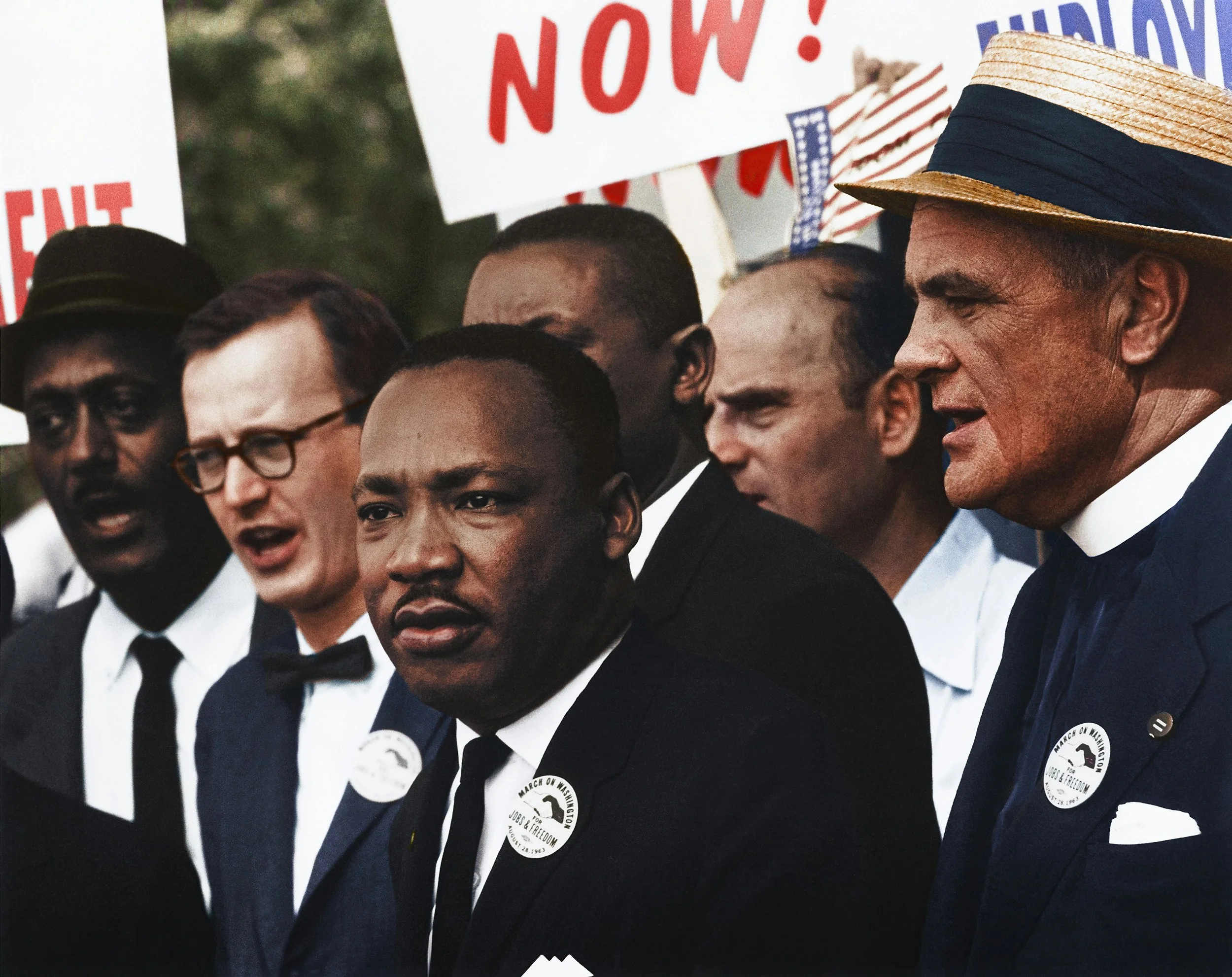
Dr. Martin Luther King, Jr. speaking about leadership and justice
Dr. King spoke about the creation of a beloved community not retaliation, but redemption; not domination, but dignity.
This vision wasn’t sentimental. It was rigorous. It required discipline, courage, and love expressed through choices.
So here’s a question for leaders:
If your workplace (or your household) is your “community,” what does “beloved community” look like there? For example:
People aren’t praised for collapse.
Rest is not punished.
Support is normal, not special.
Health is not an afterthought.
And if we want to honor King’s life’s work, we can also tell the truth about health: King explicitly named injustice in health as a moral crisis, linking inequality to real bodily harm. This matters because leader wellness isn’t only personal, it’s a justice issue in miniature. When leaders normalize care, they create healthier cultures. When leaders glorify depletion, they pass down harm.
What female leaders teach us about sustainable self-care
You don’t need a perfect routine. Maybe just a repeatable rhythm.
1) Michelle Obama: movement as therapy
Michelle Obama has described exercise as “therapeutic,” especially in moments of stress. Leadership translation: Put movement where it actually fits—not where it’s least disruptive to everyone else.
Try:
12 minutes of walking between calls
stretching during one meeting (camera off if needed)
a “movement snack” every time you finish a difficult task
2) Reshma Saujani: “keep your tank full”
Reshma Saujani has talked directly about the link between bravery and not being burned out, naming exercise and “me time” as non-negotiable fuel. Leadership translation: Put your fuel on the calendar like it’s a board meeting.
Try:
schedule workouts/therapy/meal prep first, then build meetings around them
pick “two anchors” you protect weekly (ex: sleep + movement)
3) Tricia Hersey (The Nap Ministry): rest as a birthright
Hersey’s work is a reminder that our culture has lied to us about worth and exhaustion—and that rest is part of our humanity. Leadership translation: “Rest” doesn’t only mean naps. It means ending the day before you’re empty.
Try:
a 10-minute “shutdown ritual” to close the workday
no-email windows (even 30 minutes helps)
one weekend morning with no productivity agenda
4) Arianna Huffington: sleep as a leadership decision
Arianna Huffington became a vocal advocate for sleep after her own burnout experience, emphasizing practical sleep protections (like device boundaries and evening wind-down habits).
Leadership translation: Sleep is not laziness. It’s performance, mood, immunity, and decision-making.
Try:
a 30-minute “digital sunset”
caffeine cutoff earlier in the day
a consistent “lights down” time two nights this week
5) Audre Lorde: self-care as self-preservation
Lorde’s framing matters because it removes the guilt: self-care isn’t extra—it’s protective. Leadership translation: The boundary is not selfish if it prevents breakdown.
Try:
a one-sentence boundary script
practice saying “no” without a long explanation
If you’d like a list of scripts to establish self-care boundaries and/or a travel wellness checklist (if you travel for work), send an email to me at marguerite@inhalene.com and I’ll send you a complete and downloadable guide which you can place in your work area for a gentle reminder to prioritize your self-care throughout the day.
How to care for your team as a leader without becoming the “wellness police”
A healthy workplace isn’t built by one leader doing yoga in the corner. It’s built by culture signals.
Normalize care through what you praise
Instead of praising only long hours, praise:
clarity
delegation
thoughtful planning
sustainable pacing
recovery after intense pushes
Create “permission structures”
People don’t take breaks because they’re afraid.
Try:
no-meeting windows (even 2 hours/week helps)
email norms (“no response expected after hours”)
meeting hygiene (start on time, end early, agendas required)
Build micro-practices into the workday
Begin meetings with one breath.
End meetings with “what support do you need?”
Encourage a “hydration check” at midday.
Suggest “walking 1:1s” for appropriate conversations.
Model what you want others to do
If you say “rest matters” but never rest, your team learns the truth: rest is risky.
A New Moon “Leader’s Commitment” (to honor Dr. King)
Dr. King reminded us that service is available to everyone - “everybody can be great, because everybody can serve.” But service was never meant to be self-destruction.
So let this be your commitment:
I will not confuse exhaustion with virtue.
I will not confuse availability with leadership.
I will build a life that can hold my calling.
Reflection prompts (journal these under the new moon)
Where have I been leading from depletion—and what has it cost me?
What boundary would make me a better leader, not a smaller one?
What does “beloved community” look like inside my team? Inside my home?
What would it mean to treat my health as part of my legacy?
Closing: a blessing for the leader who is learning to rest
May this new moon bring you back to your body.
May Dr. King’s legacy remind you that justice requires stamina—and stamina requires care.
May your boundaries become bridges to a healthier life, and your wellness become a quiet inheritance for the people you lead.
If you’d like support creating a sustainable rhythm, especially through perimenopause/menopause, stress management, sleep, and nervous system nourishment—Seeds of Wellness is here for you.